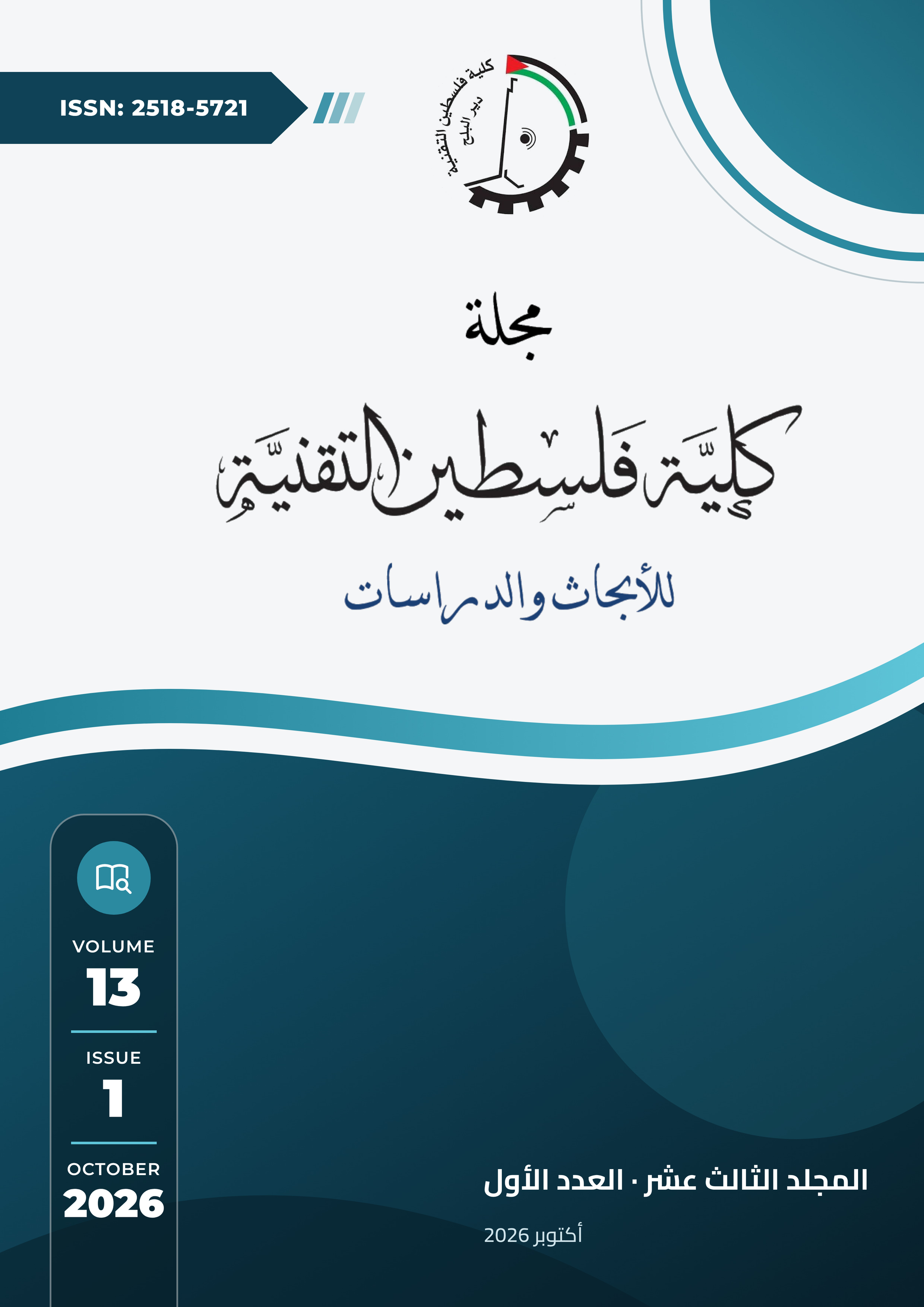
The Impact of Digital Transformation on the Quality of Accounting Information: An Applied Study on Deir El-Balah Municipality
DOI:
https://doi.org/10.47641/JRS.2026-13-1.05Keywords:
Digital Transformation, Accounting Information Quality, Qualitative Characteristics of Information, Accounting Cybersecurity, Deir El-Balah MunicipalityAbstract
This study evaluates the impact of digital transformation across its four dimensions (information security, staff training, financial cost, and legislation) on the quality of accounting information, as characterized by relevance, reliability, and timeliness, in the Deir El-Balah Municipality in the Gaza Strip. Using a descriptive-analytical approach, data were collected via an electronic questionnaire of 35 items distributed to a purposive sample of 30 accountants, auditors, and financial managers with specialized expertise in the municipality's information systems. The results showed a high level of digital transformation implementation, with "staff training" ranking first, followed by "financial cost," and a high level of accounting information quality across all its characteristics. Regression analysis further demonstrated a statistically significant impact of all digital transformation dimensions on accounting output quality, with "legislation" the most influential, explaining 45.2% of the variance, followed by "staff training" at 40.8%. Despite these positive findings, the municipality faces financial resource constraints, heavy reliance on external donor funding to sustain digitization expenditures, and ongoing concerns about cyber threats to data reliability. The study therefore recommends continuously updating cybersecurity infrastructure, intensifying specialized training to minimize human error, and securing sustainable funding to modernize the technical infrastructure independently of donor support.
References
Downloads
Published
Issue
Section
License
Copyright (c) 2026 منتصر أحمد حجازي (المؤلف)

This work is licensed under a Creative Commons Attribution 4.0 International License.
All published articles are licensed under Creative Commons Attribution 4.0 International (CC BY 4.0). Authors retain full copyright without restrictions.